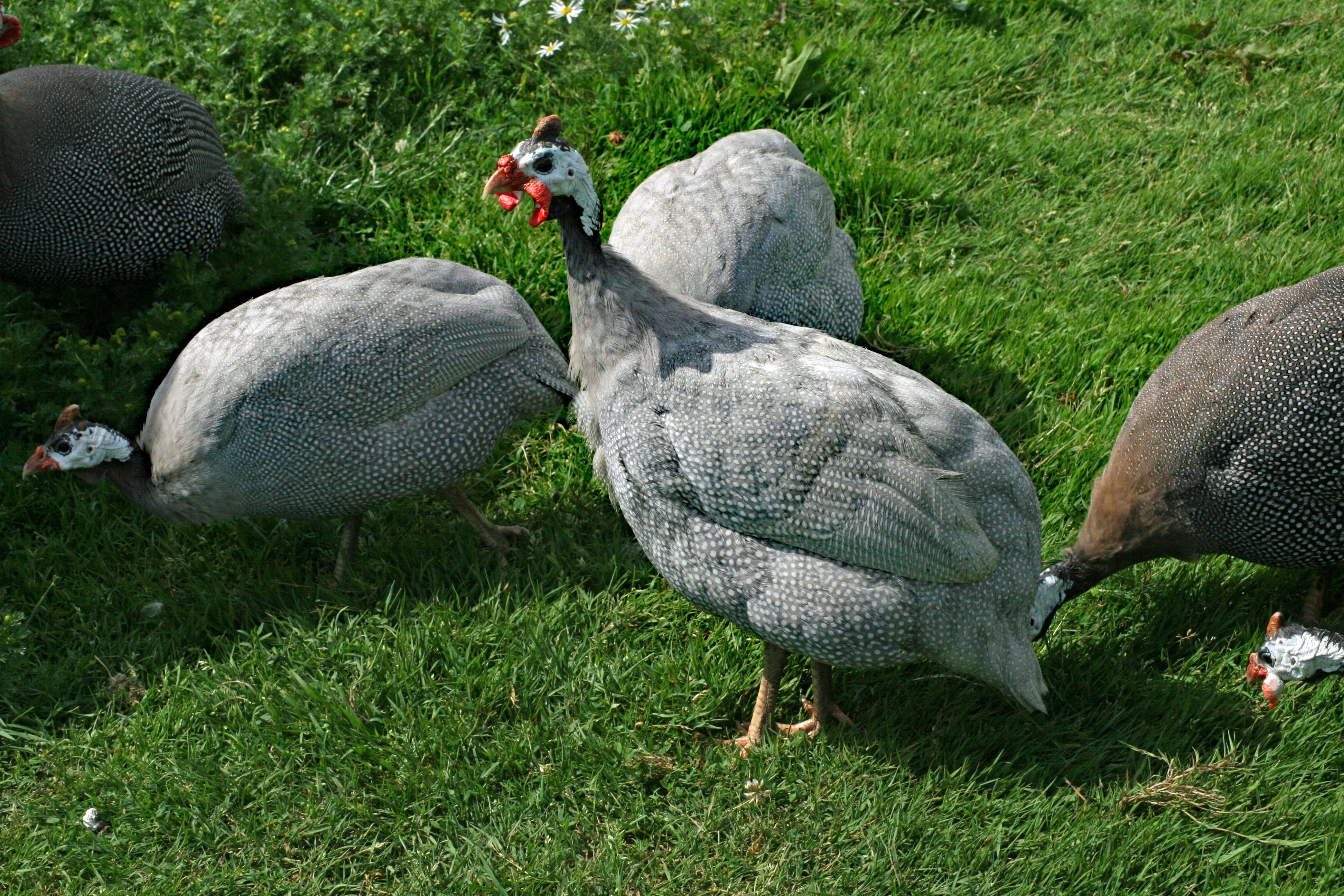
Domestic guinea fowl, sometimes called pintades, pearl hen, or gleanies, are poultry originating from Africa.
They lay 25–30. Their eggs are small, dark and extremely thick-shelled. The incubation period is 26–28 days, and the chicks are called “keets”. As keets, they are highly susceptible to dampness. After their first two to six weeks of growth they can be some of the hardiest domestic land fowl.
Sexing the birds is not as simple as telling a rooster from a hen chicken. When they are adults, the helmet and wattles of the male are larger than those of the female (Guinea-hen), and only the female makes the two-note cry imitated as “Buck-wheat!” or “Pot-rack!” while the male only has a one-note cry. Aside from that, though, the two sexes are mostly identical in appearance.
As domestics, guineafowl are valuable pest controllers, eating many insects. They are especially beneficial in controlling the Lyme disease-carrying deer tick, as well as wasp nests. They are sometimes kept with other fowl to be used as a security system against birds of prey. They will call with their loud, high shrieking voices if concerned about intruders.